
Mill Creek is a master-planned residential community in Snohomish County, known for single-family homes on wooded lots surrounded by greenbelts and retention areas. Along Trillium Boulevard and near the Mill Creek Town Center corridor, many properties feature mature Douglas fir, western red cedar, and big-leaf maple trees that add beauty but can also create clearance and safety concerns. Homeowners who work with tree removal professionals in Bellevue know the value of managing limbs that reach over rooflines, clearing narrow side-yard setbacks, and protecting root systems on sloped ground that drains into shared green space.
Those conditions are a major reason Mill Creek residents turn to tree trimming services with confidence.

Prefer to Talk to An Expert?
(425) 245-5040
Why Local Expertise Matters for Your Mill Creek Property
Mill Creek’s greenbelt edges, sloped grading, and established conifer stands call for local knowledge. Tree specialists who work in this area understand how to handle dense cover, tight access points, and soil saturation issues that shape the way tree care must be done.
From crown reduction on aging Douglas fir near the Mill Creek Sports Park to selective pruning along the wooded stretches off Bothell-Everett Highway, every project should be completed with care, accuracy, and long-term tree health in mind.
Protect your property and reduce day-to-day worry. Local professionals can help keep your trees neat, balanced, and safe over time.
Our Tree-Removal Services in Bellevue, WA, Include
Tailored Tree Services for Mill Creek's Unique Properties
Dense vegetation and compact lot layouts mean tree care in your area needs a site-specific approach, not a one-size-fits-all plan. Local crews build each job around the property layout, including root proximity to foundations, fence lines, and utility easements.
Whether you own a greenbelt-adjacent home in the Highlands neighborhood, a newer build in South Mill Creek, or a townhome near Mill Creek Town Center, the right service plan takes access limitations and tree maturity into account.
Services such as professional tree pruning, reliable stump removal, expert tree planting, and quality landscaping should be adapted to fit your property and respect the character of the neighborhood.
The History of Mill Creek and Its Impact on Tree Care Today
Mill Creek grew throughout the 1970s and 1980s as one of the Pacific Northwest’s early master-planned communities, with forest corridors intentionally preserved within the residential layout. That history still affects tree care today, especially where aging conifers, greenbelt pressure on private lots, and years of postponed canopy maintenance require experienced attention.
Overgrown Canopy and Structural Limb Failure
In Mill Creek, especially in neighborhoods like the Highlands and older areas near 35th Drive SE, many property owners deal with mature conifers that have developed long lateral limbs over decades without regular management. During windy weather, those limbs can fail, creating risks for roofs, fences, and nearby families.
Local tree service teams address these concerns with focused crown reduction, deadwood removal, and structural pruning that helps redistribute weight and lowers the chance of failure without removing healthy trees unnecessarily.
Greenbelt Encroachment and Root Zone Conflicts
The preserved greenbelt system gives Mill Creek its natural character and wildlife value, but it also creates challenges such as spreading roots and volunteer growth crossing property lines. If left unmanaged, these encroaching roots can affect drainage systems and contribute to foundation pressure or pavement lifting along driveways.
Experienced crews handle these situations through root barrier guidance, removal of unwanted volunteer growth, and coordinated trimming along shared boundaries, using methods suited to the soil and drainage patterns common in Mill Creek neighborhoods.
Saturated Soil and Post-Storm Tree Stability
Years of seasonal rainfall have left many trees on sloped lots with shallow, moisture-sensitive root systems that do not always anchor well during extended wet periods or strong wind events.
Skilled professionals improve stability by evaluating the root zone, removing trees with compromised structure when needed, and thinning upper canopies selectively to strengthen wind resistance and support long-term site safety.
Pacific Northwest Wind and Storm Damage Patterns
Weather patterns in the Bellevue region, especially Puget Sound convergence zone systems, can bring heavy wind and rain that lead to broken limbs, uprooted trees, and blocked access across Snohomish County.
Seasonal trimming, crown thinning, weight reduction cuts, and post-storm debris removal help reduce repeated storm damage and restore access quickly after severe weather.
Narrow Access and Equipment Constraints on Residential Lots
Small side yards, fencing, and sloped terrain are common in Mill Creek, which makes equipment placement and job planning more complex before trimming or removal begins.
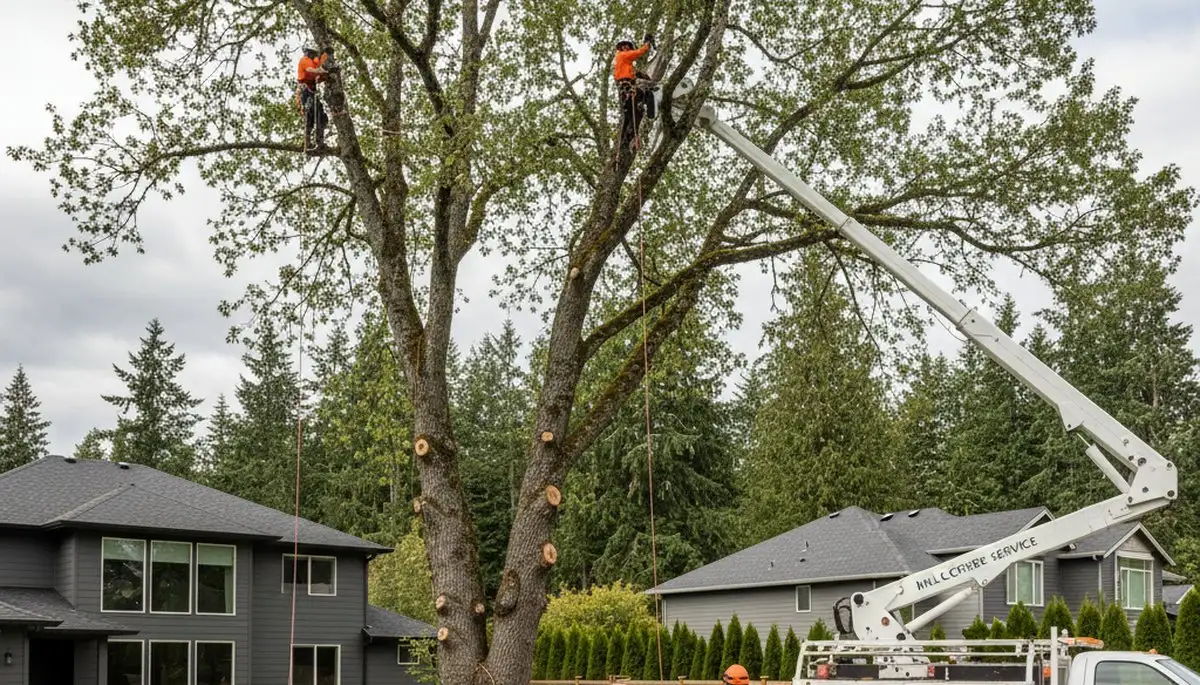
Compact rigging systems and specialized aerial lift equipment allow crews to reach the canopy precisely while minimizing disruption to landscaping and nearby structures.
Ready to improve your Mill Creek property? Call (425) 245-5040 today to schedule a free, no-obligation consultation with a local expert.
Professional care for every property. Count on Chop Chop Tree for dependable solutions.

Kick Off Your Tree Removal Project Today!
(425) 245-5040Comprehensive Tree Trimming Services for Mill Creek, WA
Year-round service from local professionals helps keep your property safe, attractive, and structurally sound. Review the options below to find the right fit for your needs.
Regular Tree Trimming Services in Mill Creek, WA
- Canopy Clearance Along Trillium Boulevard Corridors: Routine crown lifting removes low branches that interfere with sightlines and pedestrian movement along Mill Creek’s main residential roads.
- Seasonal Trimming for Greenbelt-Adjacent Lots: Homes next to retention areas benefit from scheduled trimming that keeps volunteer growth from spreading into lawns and garden spaces.
- Utility Line Clearance Near Bothell-Everett Highway: Crews manage branch growth near overhead utility corridors to help lower outage risk during fall and winter storms. Homeowners in nearby Bothell, WA face similar clearance needs along comparable residential streets.
- Ornamental Tree Shaping in South Mill Creek Subdivisions: Flowering cherry, dogwood, and Japanese maple trees are carefully shaped to preserve their form without harming blooms or foliage.
- Post-Winter Cleanup Trimming: After the wet season, crews inspect and remove weakened branches from Douglas fir and cedar trees across Mill Creek neighborhoods.
Plan routine trimming before fall winds arrive to help keep your canopy steady and your property better protected.
Intensive Tree Pruning Services in Mill Creek, WA
- Structural Pruning for Mature Conifers: Detailed pruning of established Douglas fir and western red cedar trees helps correct co-dominant leaders and reduce long-term failure risk on older lots.
- Crown Reduction for Overextended Maples: Big-leaf maples that have spread past property lines receive balanced reduction cuts that maintain tree health while restoring clearance.
- Deadwood Extraction in the Highlands Neighborhood: Removing dead and dying limbs from aging trees lowers debris hazards and supports healthier canopies.
- Elevation Pruning for Improved Light Penetration: Lower-limb removal in dense conifer stands lets more light reach lawn areas and understory plantings on shaded Mill Creek properties. Crews working across Woodinville, WA use the same elevation pruning methods on similarly wooded residential lots.
- Vista Pruning Near Mill Creek Sports Park: Targeted thinning opens views and improves airflow for properties near the park’s wooded edge.
Intensive pruning in late winter or early spring helps support strong new growth and can reduce the amount of wet-season debris.
Maintenance Tree Services in Mill Creek, WA
- Root Zone Health Monitoring: Routine checks and surface treatments help protect root zones on saturated lots from fungal decay and soil compaction that can weaken anchoring over time.
- Moss and Lichen Management on Bark Surfaces: Moist Northwest conditions encourage moss and lichen growth on bark, which can hide early signs of decay; maintenance crews watch for these issues during regular visits.
- Cabling and Bracing Assessment: Older trees with split leaders or heavy side limbs are reviewed for support systems that can extend safe use without full removal.
- Stump Management Following Removals: After a tree is removed, stump grinding and treatment help prevent regrowth and remove tripping hazards from residential yards throughout Mill Creek.
- Seasonal Debris Removal and Site Cleanup: Full debris removal and chip cleanup after trimming or pruning restore curb appeal and keep organic material away from foundations and drainage inlets.
Regular maintenance makes emergencies less likely and helps keep tree care planning more predictable through the year.
Emergency Tree Removal Services in Mill Creek, WA
- Storm-Downed Tree Extraction: Fast response for fallen trees that block driveways, damage structures, or cut off access throughout Mill Creek after wind and rain events.
- Hazard Tree Assessment and Removal: Immediate inspection and removal of trees with structural damage caused by saturated soil, root failure, or visible trunk decay.
- Limb Failure Response on Occupied Properties: Emergency crews remove large broken limbs from roofs, vehicles, and fenced areas using rigging methods that help avoid added damage.
- Post-Storm Canopy Stabilization: After major wind events, teams evaluate the remaining canopy and remove hanging or partially attached limbs before they fall.
- 24-Hour Availability for Urgent Situations: Emergency response is available when tree damage creates an immediate risk to people, structures, or public access routes in Mill Creek.
Do not wait after a storm. Unstable limbs and leaning trees can shift quickly, especially on the saturated slopes common throughout Mill Creek and nearby Snohomish County neighborhoods.
What Mill Creek Homeowners Say About Tree Trimming Services
See why Mill Creek property owners rely on Chop Chop Tree to help them find trusted local tree trimming service professionals.